
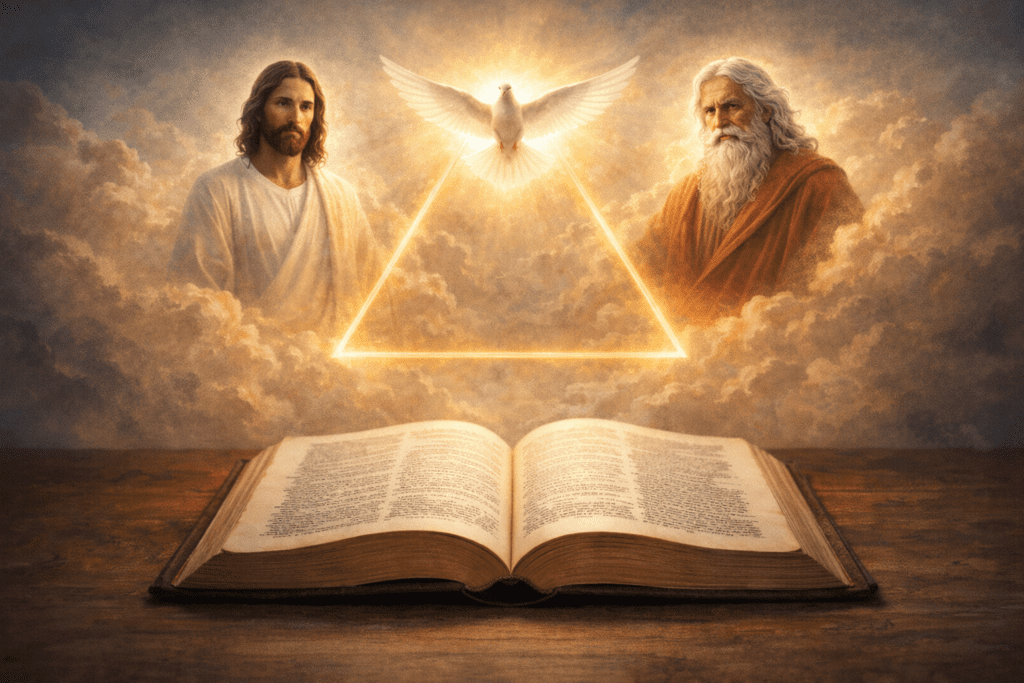
Short Answer: The word “Trinity” isn’t in the Bible, but the teaching is: Scripture reveals one God who is Father, Son, and Holy Spirit—distinct yet fully divine—so the Trinity is a faithful summary of biblical revelation.
Long Answer: The word “Trinity” isn’t in the Bible, but the teaching is: Scripture reveals one God who is Father, Son, and Holy Spirit—distinct yet fully divine—so the Trinity is a faithful summary of biblical revelation.
Christians did not invent the Trinity to complicate faith. The doctrine exists because the Bible forces us to hold three truths together: God is one, the Father is God, Jesus is God, and the Spirit is God—and yet the Father, Son, and Spirit are not the same person.
1) The Bible teaches there is one God
Scripture is unambiguous: there is only one true God (Deuteronomy 6:4; Isaiah 45:5). Christianity is not “three gods.” The Trinity starts with biblical monotheism.
2) The Father, Son, and Spirit are shown as distinct
At Jesus’ baptism, the Son is baptized, the Spirit descends, and the Father speaks from heaven (Matthew 3:16–17). This is not one person wearing three masks; it is a real distinction between Father, Son, and Spirit.
Jesus also speaks to the Father and promises to send the Spirit (John 14:16–17). Again, distinction is clear.
3) Jesus is fully divine
The New Testament attributes to Jesus what belongs to God alone.
- John calls Jesus “the Word” who was with God and was God, and who became flesh (John 1:1, 14).
- Thomas calls Jesus “My Lord and my God” (John 20:28), and Jesus receives this confession.
- Paul speaks of Jesus in divine terms and places him at the center of creation and redemption (Colossians 1:15–20).
Jesus is not merely a created messenger. The Bible presents him as truly God and truly man.
4) The Holy Spirit is fully divine and personal
The Holy Spirit is not an impersonal force. He speaks, leads, can be lied to, and is described with personal actions (Acts 13:2; Ephesians 4:30). In Acts 5:3–4, lying to the Holy Spirit is treated as lying to God. Scripture also associates the Spirit with divine work like giving new life (Titus 3:5).
5) The Bible ties Father, Son, and Spirit together
Jesus commands baptism “in the name of the Father and of the Son and of the Holy Spirit” (Matthew 28:19). Notice it says “name” (singular) and then three persons. Paul ends a letter with a triune blessing that places Jesus and the Spirit alongside the Father in a way only fitting if they share divine status (2 Corinthians 13:14).
What the Trinity is (and is not)
The Trinity means:
- One God in three persons: Father, Son, and Holy Spirit.
- Each person is fully God.
- The persons are distinct, not identical.
The Trinity does not mean:
- Three gods
- One person appearing in three forms
- A puzzle we must solve before we can trust Jesus
What to do next
- Read Matthew 3:16–17 and Matthew 28:19 slowly and note what they imply about God.
- Read John 1 and John 14–17 to see Jesus’ relationship with the Father and the Spirit.
- Worship with humility: God is knowable, but not manageable (Romans 11:33–36).
- If you’re confused, talk with a mature believer and work through these passages together.
The Trinity is biblical because it’s the best summary of what Scripture reveals about the one true God.
Key Scriptures: Deut 6:4; Isa 45:5; Matt 3:16–17; Matt 28:19; John 1:1, 14; John 14:16–17; John 20:28; Acts 5:3–4; 2 Cor 13:14; Col 1:15–20