
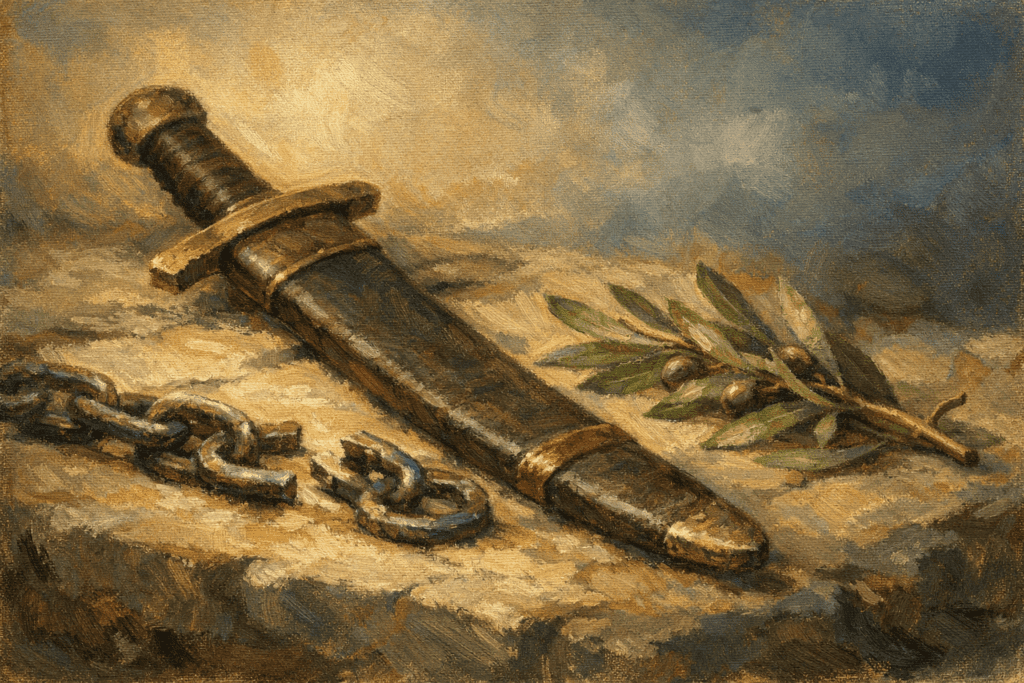
Short Answer: The Bible condemns murder and celebrates peace, yet it also recognizes that using force to stop immediate, unjust violence may be morally permitted when it is necessary, restrained, and not driven by revenge.
Long Answer: Christians should treat every human life as sacred, and Scripture clearly condemns murder. What does the Bible say about killing in self-defense? The Bible teaches that vengeance and hatred are always wrong, but protecting life in a moment of unavoidable danger can be morally different from murder—especially when the goal is to stop harm, not to “get even.”
Taking a life is never something to brag about or treat lightly. Even when someone acts to protect an innocent person, the outcome is still tragic because the person who dies is an image-bearer of God (Genesis 1:26–27). That’s why a biblical answer has to hold together several truths at once: God’s hatred of murder, God’s love for victims, God’s call to peacemaking, and God’s permission for justice and restraint in a broken world.
Why does the Bible begin with the sacredness of human life?
The Bible anchors human value in God’s image (Genesis 1:26–27). That truth shapes everything that follows. Because people bear God’s image, violence is not entertainment, and killing is not a casual matter. After the flood, God also highlights the seriousness of shedding human blood (Genesis 9:6). The point is not to invite revenge, but to show how weighty human life is to God.
This starting point changes how Christians talk about “self-defense.” Instead of asking, “What am I allowed to do?” we begin with, “How can I honor God’s heart for life in a dangerous world?” For most situations, that means pursuing peace, avoiding needless escalation, and protecting people from harm without letting anger rule the moment.
What does the command You shall not murder actually forbid?
Exodus 20:13 forbids murder—the wrongful taking of human life. Scripture treats murder as a grave sin because it expresses contempt for God’s image in a person and it attacks what God loves.
Jesus goes even deeper by confronting the heart behind violence: sinful anger, contempt, and hatred (Matthew 5:21–22). That means you can “win” a physical conflict and still lose spiritually if your heart is fueled by rage, pride, or a desire to harm. God is not only concerned with what we did; he cares about what we wanted.
So when people talk about defending themselves, the Bible pushes us to ask: Is my intent to stop immediate harm, or to punish? The first can be protective; the second is vengeance—and vengeance belongs to God (Romans 12:19).
Does the Bible recognize situations where force is used to stop harm?
Yes, without celebrating violence. In Old Testament law, there is a passage about a nighttime break-in that shows God’s law taking the reality of immediate danger seriously (Exodus 22:2–3). The details can be complex, but the larger point is simple: Scripture recognizes that split-second threats are morally different from planned violence, and that protecting life matters.
In the New Testament, Paul also describes civil government as a tool God can use to restrain wrongdoing (Romans 13:1–4). That doesn’t mean the state is always right, but it does show that the use of force is not automatically sinful in every possible context. Restraining evil is sometimes necessary in a fallen world.
These passages help many Christians form a careful principle: force may be used to stop immediate, unjust violence when it is truly necessary, and when it is carried out with restraint.
How does Jesus teaching about turning the other cheek fit?
Some believers read “turn the other cheek” (Matthew 5:38–39) as a command to never resist harm in any way. But in context, Jesus is confronting retaliation—the human instinct to repay insult with insult and injury with escalation. He calls his disciples to refuse the prideful demand for payback.
Refusing revenge, though, is not the same as refusing to protect someone from being attacked. Loving your neighbor (Mark 12:31) may include intervening when a person is in immediate danger—especially the vulnerable, like children, the elderly, or someone who cannot escape.
A helpful way to hold Jesus’ words alongside the rest of Scripture is this: Christians must never seek revenge, but they may act to stop severe harm. The aim is not domination. The aim is protection, peace, and the preservation of life as far as possible.
What heart motives separate protection from vengeance?
The Bible gives repeated warnings about the spiritual danger of anger (James 1:19–20). That’s why motive is not a side issue. It’s central.
Here are questions worth asking, especially when talking about real-life scenarios:
- Am I acting to stop immediate harm, or to make someone “pay”? (Romans 12:17–21)
- Am I choosing the least harmful option available, or the most extreme one?
- When the threat is over, am I willing to stop and show mercy? (Matthew 5:7)
- Is there hatred in my heart toward this person, even if I call it “justice”? (Matthew 5:21–22)
Protective action focuses on ending the danger. Vengeance focuses on hurting the person who caused it. Scripture forbids that second path because it replaces God as Judge and turns our hearts toward cruelty.
What does restraint look like in a truly dangerous moment?
The Bible does not provide a modern policy manual, but it does shape a Christian posture: be quick to listen, slow to speak, slow to anger (James 1:19). In crisis situations, the most faithful goal is to end the threat with as little harm as possible.
Restraint can include things like:
- Avoidance and escape when feasible.
- Calling for help and involving proper authorities when possible.
- De-escalation rather than escalation when you can safely do so.
- Stopping the moment the threat stops, rather than continuing out of adrenaline or rage.
That last point matters. Once a person is no longer a threat—once they are disarmed, fleeing, or restrained—the moral purpose of defense has ended. Continuing to harm after the danger is over moves toward vengeance, which Scripture warns against.
What about Christians who believe all violence is wrong?
Faithful Christians have held different convictions on this question. Some take a pacifist position, emphasizing Jesus’ call to love enemies (Matthew 5:44) and Paul’s call to overcome evil with good (Romans 12:20–21). Others believe Scripture allows defensive force in limited situations, especially to protect the innocent from immediate unjust harm (Exodus 22:2–3; Romans 13:1–4).
It’s possible to disagree here and still share deep commitments: the sanctity of life, the rejection of vengeance, the call to peacemaking, and the desire to follow Jesus with integrity. If you’re wrestling, don’t rush past conscience. Seek wisdom in Scripture, prayer, and counsel from mature believers (James 1:5).
If someone has killed in self-defense, what does the gospel say?
Many people ask this because they carry a real memory—something that happened fast and changed everything. If that’s you, you may feel grief, fear, shame, numbness, or confusion. You may also feel relief that you survived, and then feel guilty for feeling relief. These reactions can be heavy.
The gospel is not that only the “untroubled” are welcomed by God. The gospel is that Jesus died for our sins, was buried, and was raised (1 Corinthians 15:3–4). God invites honest confession and real cleansing (1 John 1:9). If you sinned—through hatred, recklessness, or wrongful violence—bring that honestly to God. If you acted to stop immediate harm and you’re still haunted, bring that pain honestly to God too. Either way, you do not have to carry it alone.
Also, repentance is never just private words. If wrongdoing occurred, repentance includes taking responsibility and seeking reconciliation where possible. If you were harmed or threatened, it’s right to pursue safety and involve proper authorities. The church should be a place of truth, care, and wise support—not isolation.
How should a Christian prepare their heart before a crisis ever happens?
Most “self-defense” situations never occur. But the heart habits we build now shape how we respond later. Scripture calls us to be peacemakers (Matthew 5:9) and to put away bitterness and rage (Ephesians 4:31–32). That kind of spiritual formation matters because fear and anger can make people reckless.
A Jesus-shaped preparation includes:
- Practicing forgiveness so resentment doesn’t become a default setting.
- Learning self-control, because self-control is part of godliness (2 Peter 1:5–8).
- Choosing humility, so pride doesn’t push you to prove something.
- Building strong community, so you’re not led by isolation or paranoia.
When disciples are shaped by Christ, they can pursue peace without being naive about evil.
What to do next
- Ask God for wisdom, courage, and self-control, and pray for a heart that refuses vengeance (James 1:5; Romans 12:19).
- Talk with a trusted pastor/elder or mature believer about your convictions and your conscience, especially if you feel torn or fearful.
- If you have trauma, guilt, or recurring memories connected to violence, seek pastoral care and wise counseling; you don’t have to process it alone.
- Commit to everyday peacemaking—quick repentance, gentle words, and refusing bitterness—so anger doesn’t master you (Matthew 5:9; James 1:19–20).
- If you’re ready to turn to Jesus, respond with repentant faith: confess him as Lord and pursue baptism by immersion in connection with a healthy local church for ongoing discipleship and support (Acts 2:38).
Key Scriptures: Genesis 1:26–27; Genesis 9:6; Exodus 20:13; Exodus 22:2–3; Matthew 5:21–22; Matthew 5:38–39; Matthew 5:44; Mark 12:31; Romans 12:17–21; Romans 13:1–4; James 1:19–20; 1 John 1:9