
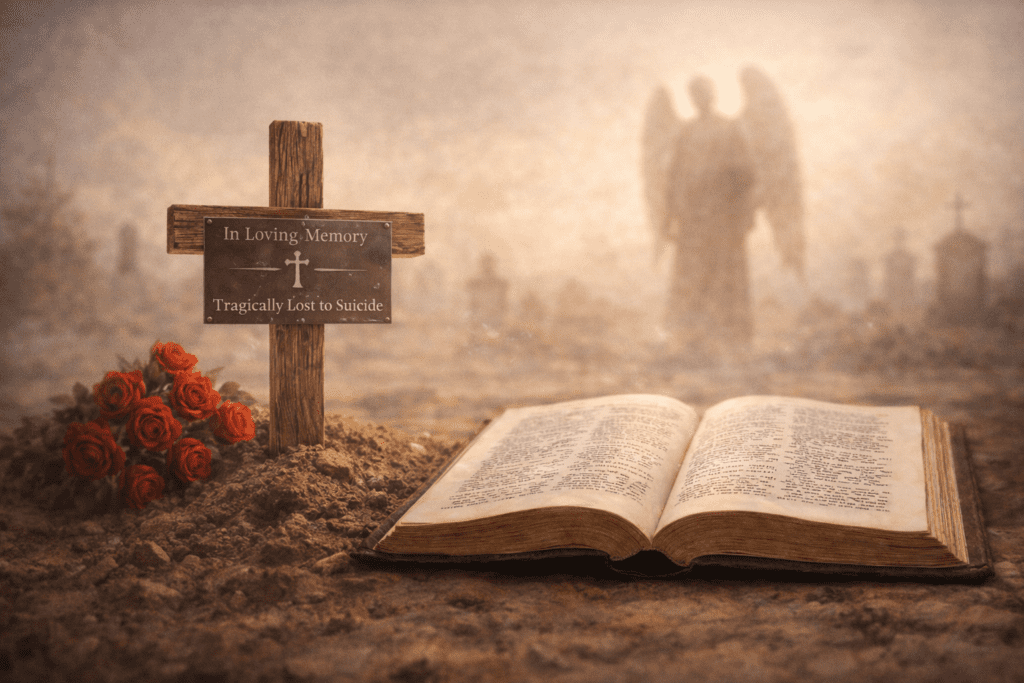
Short Answer: The Bible treats human life as sacred and suicide as a tragic result of sin and suffering, yet a Christian’s salvation rests in Christ’s grace—not in a final moment—so we should respond with both moral seriousness and deep compassion.
Long Answer: The Bible treats human life as sacred and suicide as a tragic result of sin and suffering, yet a Christian’s salvation rests in Christ’s grace—not in a final moment—so we should respond with both moral seriousness and deep compassion.
If you’re asking because you feel hopeless or overwhelmed, please know you are not alone—and your life matters. God is near to the brokenhearted, and there is help and hope even when you can’t feel it (Psalm 34:18).
What Scripture says about life and suffering
The Bible consistently presents life as a gift from God. We are made in God’s image (Genesis 1:27), and the command “You shall not murder” reflects the sacredness of human life (Exodus 20:13). Suicide is self-directed killing, so it falls under the category of taking a life that belongs to God.
At the same time, the Bible is honest about crushing sorrow. God’s people have experienced despair so deep they wished they could die (1 Kings 19:4; Jonah 4:3). Those passages do not excuse self-harm, but they do show that hopeless feelings are not new—and God meets people in them with care, presence, and help.
Is suicide a sin?
Suicide is not portrayed as a faithful response to suffering. It involves taking into our own hands what belongs to God—our life and our future. Scripture calls us to pour out our anguish to the Lord, seek help, and endure with hope (Psalm 42; Romans 12:12).
But it’s also important to say this carefully: many suicides happen in the context of severe depression, trauma, distorted thinking, or mental illness. That doesn’t make suicide “right,” but it should shape how we speak. We should avoid quick judgments and treat this as a profound tragedy that calls for compassion.
What if a Christian dies by suicide?
Some people assume suicide is an automatic loss of salvation. Scripture does not speak that way. A Christian is saved by grace through faith (Ephesians 2:8–10). Our hope rests in Jesus’ finished work, not in our flawless record.
At the same time, the New Testament warns against living in unrepentant sin and calls believers to persevere (Hebrews 3:12–14). So we should not treat suicide lightly or pretend it is spiritually harmless.
A wise, biblical way to hold both truths is this:
- Suicide is a grievous sin and a devastating wound.
- Salvation belongs to the Lord, and we trust God’s justice and mercy.
- We do not pronounce final verdicts over someone’s soul with certainty—God alone sees perfectly.
For grieving families, this matters: your loved one’s final moment does not erase every sign of faith you saw over years. Entrust them to the Lord who is both holy and compassionate (Genesis 18:25).
What to do next
- If you are in danger right now, tell someone immediately and seek emergency help. Don’t stay alone.
- Reach out to a pastor, counselor, doctor, or trusted friend today. Let others carry this with you (Galatians 6:2).
- If you’re grieving a suicide loss, allow yourself to grieve honestly. Seek support from mature believers and professional care.
- Fill your mind with truth: God hears, God is near, and this pain is not the end (Psalm 34:18; Romans 8:38–39).
You were not created to fight this battle by yourself. There is help, and there is hope.
Key Scriptures: Gen 1:27; Ex 20:13; 1 Kings 19:4–8; Psalm 34:18; Psalm 42:5; Rom 8:38–39; Eph 2:8–10; Heb 3:12–14; Gal 6:2