
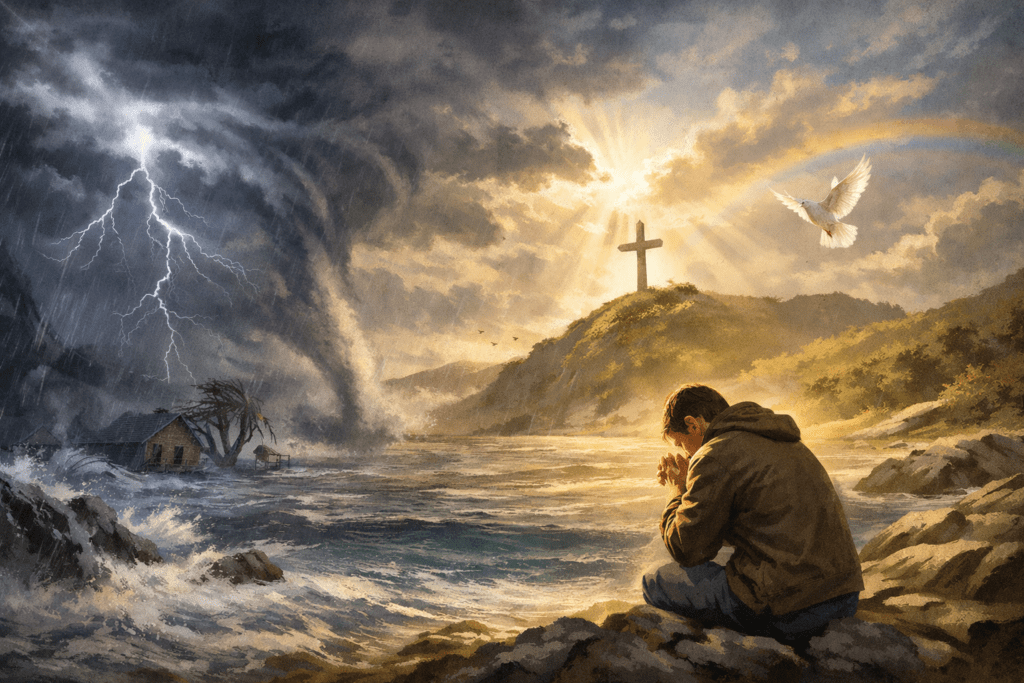
Short Answer: The Bible acknowledges that storms and disasters can stir real fear, but God calls us to bring our anxiety to him, trust his presence and power, and take wise action while holding onto the peace Christ gives.
Long Answer:
The Bible acknowledges that storms and disasters can stir real fear, but God calls us to bring our anxiety to him, trust his presence and power, and take wise action while holding onto the peace Christ gives.
Storms, tornado warnings, earthquakes, wildfires—disasters remind us how fragile life is. Feeling afraid in those moments doesn’t mean you lack faith. The Bible is honest about fear, and it shows God meeting his people with steadying promises and practical wisdom.
God does not shame you for feeling afraid
Scripture includes prayers filled with trembling and distress. The Psalms often begin with fear and end with renewed trust (Psalm 56:3–4). Fear is a human response to danger. What matters is where you take your fear.
God invites you to bring anxiety to him
Anxiety grows when we try to carry tomorrow alone. God calls us to bring our needs to him in prayer. “Do not be anxious… but in everything… let your requests be made known to God” (Philippians 4:6–7). This doesn’t mean you flip a switch and feel calm instantly. It means you move your burdens from your shoulders to God’s hands.
A simple prayer in a storm can be: “Lord, have mercy. Help us. Give us wisdom. Keep us steady.”
God is present and strong in trouble
Psalm 46 was written for times like this: “God is our refuge and strength… therefore we will not fear” (Psalm 46:1–2). Notice the logic: not “nothing bad will happen,” but “God is a refuge even when the earth shakes.”
Jesus also spoke peace into a literal storm. When the disciples panicked, Jesus calmed the wind and waves and then asked why they were so afraid (Mark 4:35–41). He wasn’t mocking them—he was teaching them that his presence changes what danger means. The storm was real, but Jesus was more real.
Trust does not cancel wisdom
Faith is not pretending danger doesn’t exist. The Bible commends wisdom and preparation (Proverbs 22:3). If authorities issue warnings, take shelter. Make plans. Help your neighbors. Pray and act.
Christian calm is not carelessness; it’s courage rooted in God.
How to think about disasters without panic
Disasters are reminders that creation is broken and groaning (Romans 8:22). They are also reminders that our ultimate security is not in weather patterns, buildings, or even health—but in the Lord who holds our lives.
When fear rises, it can help to focus on:
- God’s presence: “I am with you” (Isaiah 41:10).
- God’s peace: Jesus gives a peace the world cannot give (John 14:27).
- God’s future: suffering is real, but it’s not the final chapter (Romans 8:18).
What to do next
- Pray specifically and simply during storms: ask for mercy, protection, and wisdom (Philippians 4:6).
- Use wise preparedness: weather alerts, shelter plans, emergency supplies, checking on vulnerable neighbors (Proverbs 22:3).
- After a disaster, process your fear in community—talk with believers, seek pastoral care, and consider professional help if anxiety becomes overwhelming.
- Fill your mind with Scripture when you feel flooded: Psalm 46, Psalm 91, Philippians 4:6–7, and Jesus calming the storm (Mark 4:35–41).
- Look for ways to serve: fear shrinks when love moves outward (1 John 4:18).
God does not promise a storm-free life, but he does promise his presence, his peace, and a hope that cannot be destroyed.
Key Scriptures: Psalm 46:1–2, 10; Phil 4:6–7; Mark 4:35–41; Psalm 56:3–4; Prov 22:3; Isa 41:10; John 14:27; Rom 8:18, 22; 1 John 4:18