
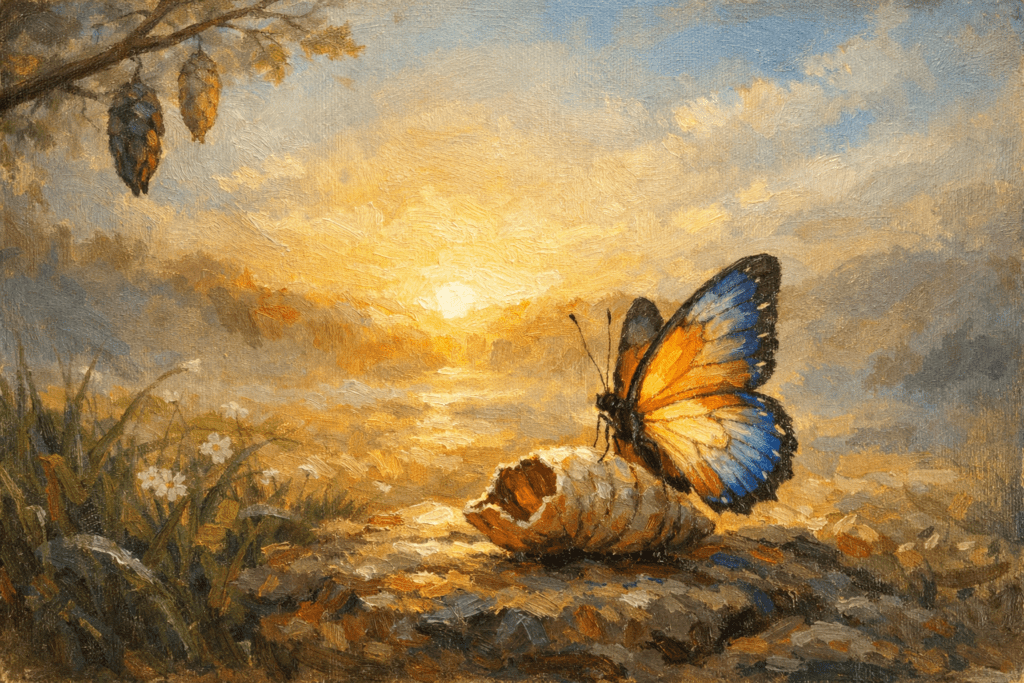
Short Answer: To be born again is to receive new life from God through Jesus by the Holy Spirit—life that brings repentance, faith, and a new direction. In the Bible’s storyline, Jesus’ phrase “born of water and Spirit” (John 3:5) echoes God’s promised cleansing and renewal, and the New Testament consistently presents Christian baptism as the gospel-appointed moment where repentant faith meets that cleansing and new-life gift.
Long Answer: John 3 begins with Nicodemus doing what many people do: he acknowledges Jesus is “from God” (John 3:2). But Jesus presses deeper. Nicodemus’s recognition, respect, and even confession are not enough. The issue is not whether Nicodemus is religious—it’s whether he has been reborn into the kingdom:
“No one can see the kingdom of God unless they are born again.” (John 3:3)
That’s why the conversation is so confronting. Nicodemus is “Israel’s teacher” (John 3:10), but Jesus insists that entrance into God’s kingdom requires a new origin, a new life that cannot be achieved by pedigree, tradition, or moral effort.
Born of “water and Spirit”: not a random phrase
When Jesus says, “No one can enter the kingdom of God unless they are born of water and the Spirit” (John 3:5), he is not inventing new vocabulary. He is drawing from the Bible’s deep patterns—especially the prophets’ promise that God would one day cleanse his people and put his Spirit within them.
Ezekiel’s promise: cleansing water + new Spirit
Ezekiel 36 describes the restoration we experience under the New Covenant of Jesus using the same paired imagery:
- “I will sprinkle clean water on you, and you will be clean…”
- “I will give you a new heart…”
- “I will put my Spirit in you and move you to follow my decrees…”
(Ezekiel 36:24–28)
That’s the heart of “born of water and Spirit”: cleansing from impurity and internal renewal that leads to an obedient life from the inside out. The pairing is covenant language: God washing away uncleanness and replacing a “heart of stone” with a “heart of flesh.”
Creation imagery: Spirit over the waters
Even earlier, Scripture pairs Spirit and water at creation: “the Spirit of God was hovering over the waters” (Genesis 1:2). The Bible’s story begins with God bringing life and order out of watery chaos—so it’s fitting that Jesus describes God’s saving work as a kind of new creation.
Wind and Spirit: you can’t manufacture rebirth
Jesus then connects new birth to another biblical pairing: wind and Spirit:
“The wind blows wherever it pleases… So it is with everyone born of the Spirit.” (John 3:8)
The Greek word can mean wind/breath/spirit, emphasizing that the new birth is not human self-improvement. It is God’s action—real, powerful, and visible in its effects, even if invisible in its source.
That matches Ezekiel’s valley of dry bones (Ezekiel 37). Dead bones cannot resurrect themselves. God says, “I will make breath enter you, and you will come to life” (Ezekiel 37:5). New birth is resurrection-level work.
Where baptism fits: the New Testament “water + Spirit” moment
John 3 grounds new birth in God’s promised cleansing and Spirit-renewal. The rest of the New Testament shows how people enter that promised reality: through repentant faith expressed in baptism—not as a human achievement, but as God’s appointed gospel response.
Washing of rebirth
Titus 3 brings the themes together:
“He saved us… because of his mercy. He saved us through the washing of rebirth and renewal by the Holy Spirit…” (Titus 3:4–6)
That language naturally matches the “water and Spirit” promise: God mercifully saves, washes, and renews by the Spirit through Jesus.
United with Jesus’ death and resurrection
Paul explains baptism as union with Christ’s saving work:
- “We were… baptized into his death… so that… we too may live a new life.” (Romans 6:3–4)
Baptism is the gospel enacted: burial and resurrection—death to the old, life in the new. That is why baptism and new-birth themes frequently travel together: both describe God bringing life where there was death.
Not “easy believism,” but believing that becomes new life
John 3:16 is not reduced to bare acknowledgment. In this conversation, “belief” is the kind of trust that yields new birth—new life, new heart, new direction. Nicodemus’s initial “we know you are from God” isn’t the finished product. Jesus calls him into the deeper transformation that God alone can give.
So the Bible keeps the same shape:
- God initiates by mercy and Spirit power
- We respond with surrendering faith
- Baptism is the normal biblical moment of that response, where we identify with Christ and begin life in his kingdom
What it means for you: invitation to start over—God’s way
Nicodemus’s question (“How can someone be born when they are old?”) voices what we all feel: How can I start again after committing so much of my life to this path?
Jesus’ answer is both humbling and hopeful:
- You can’t create your new birth.
- But God can.
- And God has promised cleansing, a new heart, and his Spirit for those who come to Jesus.
New birth is not a label. It is a rebirth that produces new life: stone to flesh, death to life, dry bones standing again.
A clear biblical response
The New Testament pattern is simple and serious:
- Repent — turn from sin and self-rule to God.
- Believe — trust Jesus as Savior and confess him as Lord.
- Be baptized — the biblical step where faith publicly unites with Christ’s death and resurrection and begins the life of discipleship.
This doesn’t make baptism a “work” that earns salvation. It makes baptism the God-given response of faith in the saving Christ—where the message of John 3 meets real-life obedience and a new beginning.
What is a common misunderstanding about being born again?
A common misunderstanding is treating being born again as a one-time emotional event that guarantees heaven while leaving life basically unchanged. Some people had a moving camp experience or prayed a prayer years ago, but there is no ongoing repentance, no love for Jesus, and no desire to obey him. Scripture warns us not to confuse religious moments with a living faith (Matthew 7:21–23; 1 John 2:3–6).
Another misunderstanding is the opposite: thinking you must become “good enough” before God will accept you. That turns the gospel upside down. God doesn’t wait for you to clean yourself up; he gives new life that begins the cleansing. The new birth produces growth, but growth takes time. A newborn is truly alive even though they’re still weak.
If you’re unsure where you stand, ask honest questions:
- Do I trust Jesus himself, not just Christian ideas?
- Am I turning from sin, even imperfectly, because I want to follow him?
- Do I want to obey Christ and belong to his people?
- Have I responded to the gospel in repentance, confession of Jesus as Lord, and baptism into Christ?
God is not trying to keep sincere seekers in the dark. He wants you to come to Jesus with truth and humility (John 3:16–18). Real assurance grows as you keep returning to Christ, walking in the light, and seeing the Spirit form new fruit in you (1 John 5:11–13; Galatians 5:22–23).
What to do next
- Read John 3:1–21 slowly, and ask God to help you understand what Jesus is saying and how you should respond.
- Talk with a pastor/elder or a trusted mature Christian about repentance, faith, and what it means to follow Jesus as Lord.
- If you have not been baptized into Christ, seek baptism by immersion as a faith response, and do it in connection with a healthy local church community.
- Begin simple discipleship rhythms: prayer, Scripture, worship, and shared life with other believers (Acts 2:42).
- If you feel stuck in guilt or fear, bring it into the light with Jesus and his people; ask for prayer, counsel, and support as you take concrete steps of obedience.
Key Scriptures: John 3:1–8; John 3:14–18; John 1:12–13; Genesis 1:2; Ezekiel 36:24–28; Ezekiel 37:1–14; Titus 3:4–8; Romans 6:3–4; Titus 3:5–7; 1 Peter 1:3; 2 Corinthians 5:17; Romans 10:9–10; Acts 2:38; Romans 6:3–4; Galatians 3:27; Ephesians 2:1–10; 1 John 5:11–13