
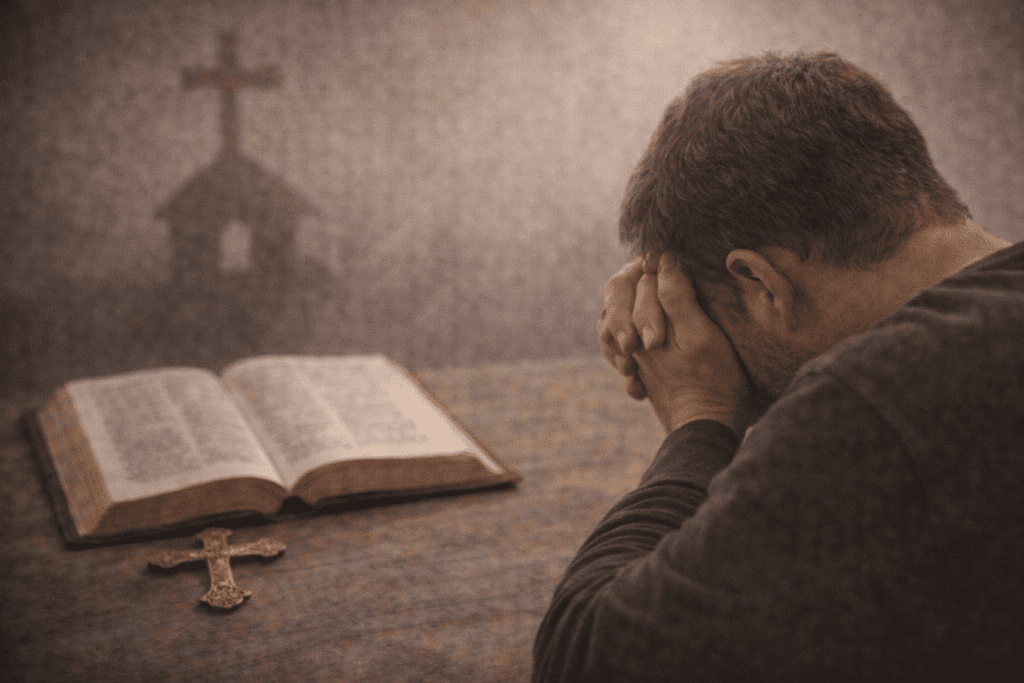
Short Answer: When a Christian sins, they damage fellowship with God and others, but they don’t stop being God’s child; Scripture calls believers to confess, repent, and return to Christ, trusting his ongoing forgiveness and continuing to grow in holiness.
Long Answer: When a Christian sins, they damage fellowship with God and others, but they don’t stop being God’s child; Scripture calls believers to confess, repent, and return to Christ, trusting his ongoing forgiveness and continuing to grow in holiness.
Christians still sin. That’s not an excuse—it’s a reality the New Testament addresses directly. The good news is that Jesus didn’t only save us at the beginning of our faith; he continues to intercede for us and cleanse us as we walk in the light (1 John 1:7).
Sin is serious, even for believers
When a Christian sins, it grieves God and can harden the heart if ignored (Ephesians 4:30; Hebrews 3:12–13). Sin always has consequences. It can damage relationships, weaken spiritual sensitivity, and invite discipline from a loving Father who refuses to leave us comfortable in rebellion (Hebrews 12:5–11).
So the right response to sin is never casualness. It is humility and repentance.
Do Christians lose salvation every time they sin?
The Bible does not present salvation as something believers “lose” every time they stumble. Christians are justified by grace through faith, not by perfect performance (Ephesians 2:8–10). At the same time, Scripture warns against treating sin lightly or choosing a pattern of unrepentant rebellion (Hebrews 10:26–29).
A helpful biblical distinction is this:
- A believer may stumble into sin and be called back through confession and repentance.
- A believer must not settle into a life of ongoing, willful, unrepentant sin.
What should a Christian do when they sin?
1) Confess honestly
God does not ask you to hide. He invites you to bring sin into the light. “If we confess our sins, he is faithful and just to forgive” (1 John 1:9). Confession means agreeing with God about what you did—no excuses, no minimizing.
2) Repent and turn
Repentance is not only feeling bad; it’s turning back to God and away from sin (Acts 3:19). That often includes practical changes—ending a relationship, setting boundaries, making restitution, removing temptation, seeking accountability.
3) Remember you have an Advocate
When Christians sin, the answer is not despair but Jesus. “We have an advocate with the Father, Jesus Christ the righteous” (1 John 2:1–2). Your hope rests in Christ’s righteousness, not your ability to clean yourself up.
4) Accept loving discipline
Sometimes God allows consequences or brings correction to restore you (Hebrews 12:5–11). Discipline is not rejection; it is love aimed at holiness.
What if I keep struggling with the same sin?
Ongoing struggle can be discouraging, but struggle is not the same as surrender. If you are fighting, confessing, and seeking help, that is evidence of God’s work in you.
Growth often includes:
- honest accountability (James 5:16)
- replacing old habits with new practices (Ephesians 4:22–24)
- renewing your mind in Scripture (Psalm 119:9–11)
- staying close to Christian community (Hebrews 10:24–25)
What to do next
- Confess your sin to God today and ask for clean hands and a renewed heart (Psalm 51:10).
- Take one concrete step of repentance (delete the app, end the secret, tell a trusted believer).
- If your sin harmed someone, seek reconciliation where possible.
- Keep walking in the light—daily time in Scripture and prayer, regular worship, and honest community.
God’s grace is not permission to sin. It is power to return, be restored, and keep growing in Christ.
Key Scriptures: 1 John 1:7–9; 1 John 2:1–2; Eph 4:30; Heb 3:12–13; Heb 12:5–11; Acts 3:19; Eph 2:8–10; James 5:16; Psalm 51:10; Heb 10:24–29