
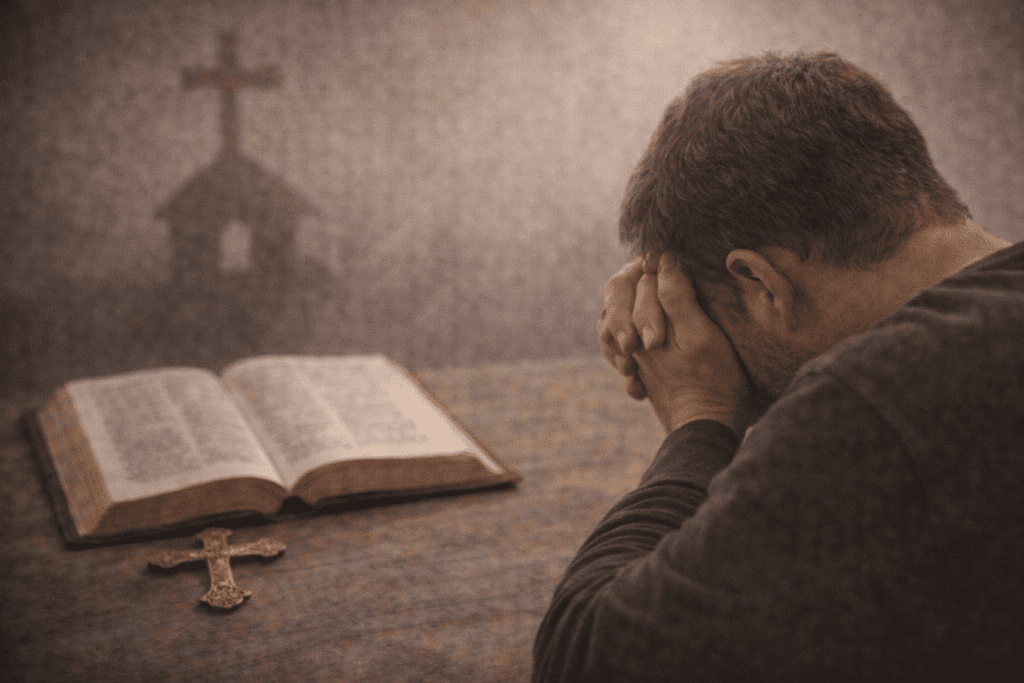
What happens when a Christian sins?

What happens when a Christian sins?

This question sits near an essential: Salvation is by grace through faith.

When a believer sins, God convicts them, calls them to repent and confess, and forgives them through Jesus—restoring fellowship while still allowing real consequences and giving serious warnings against hardened, unrepentant rebellion.

Christians are saved by God’s grace in Jesus, not by perfect performance. Still, real believers can stumble in serious ways, and sin is never “no big deal” in the Bible. So here’s the question many people carry with fear or confusion: What happens when a Christian sins? Scripture gives both comfort and caution—comfort for the repentant, and caution for anyone who wants to cling to sin.

The comfort is this: Jesus remains a faithful Savior, and God does not stop being Father the moment His child fails. The caution is this: ongoing, willful, unrepentant sin is spiritually deadly, and God calls His people to turn back quickly and walk in the light.

A Christian’s sin doesn’t surprise God, but it does damage fellowship

When you come to Christ, you are justified—declared right with God—because of Jesus’ death and resurrection (Romans 8:1). That verdict is not earned by a clean track record. But sin still harms a believer’s day-to-day fellowship with God.

Think of it like this: a child doesn’t stop being a child when they disobey, but the relationship is strained until the problem is brought into the light. In the same way, sin can:

  • Grieve the Holy Spirit (Ephesians 4:30)
  • Cloud your joy and assurance (Psalm 32)
  • Wound your conscience (1 Timothy 1:19)
  • Hurt other people (James 3; Colossians 3:12–13)
  • Invite consequences even when God forgives (Galatians 6:7–8)

This is why the Bible doesn’t tell believers to pretend sin isn’t there. It calls us to honest confession and real repentance.

God brings conviction, not condemnation

For the Christian, conviction is one of God’s mercies. The Holy Spirit exposes sin so it can be confessed, forgiven, and put to death. Condemnation says, “You are hopeless.” Conviction says, “Come back to Jesus.”

That’s why 1 John is so steady: believers are told not to deny sin, but also not to despair. God invites us to walk in the light, and when we confess, He forgives and cleanses (1 John 1:7–9). And when we stumble, Jesus is our Advocate—our righteous representative—because His sacrifice is sufficient (1 John 2:1–2).

If you are grieved by your sin and want to change, that grief can be a sign of spiritual life, not spiritual death. Dead hearts don’t repent; living hearts do.

Confession and repentance are the normal Christian path back

When a Christian sins, the Bible’s “next step” is not hiding, self-punishment, or excuses. It’s confession and repentance.

Confession is agreeing with God about what you did. It’s specific, honest, and humble (1 John 1:9; James 5:16).
Repentance is turning around—changing direction. It includes sorrow, but it goes beyond feelings into obedience (2 Corinthians 7:10).

Repentance often looks like practical decisions, not just promises:

  • cutting off access to temptation (Romans 13:14)
  • seeking accountability (James 5:16)
  • making restitution where possible (Luke 19:8)
  • replacing sinful habits with righteous ones (Colossians 3:5–14)

God’s forgiveness is not “God pretending it didn’t happen.” It is real pardon purchased by Jesus, and it comes with real cleansing that reshapes your life.

Forgiven doesn’t always mean consequence-free

The Bible is realistic: God can forgive completely and still allow consequences to remain. A lie may be forgiven, but trust may still need time to rebuild. Sexual sin may be forgiven, but relational fallout or health consequences may still be present. Angry words may be forgiven, but the wound might still need healing.

Consequences are not always proof that God hasn’t forgiven you. Sometimes they are part of God’s loving discipline and training (Hebrews 12:5–11). His aim is restoration and holiness, not revenge.

What about assurance and eternal security?

Many believers ask, “If I sin, do I lose my salvation?” Scripture answers in a way that keeps us both secure in Christ and serious about sin.

Here are two truths the Bible holds together:

God truly keeps His people

Believers can have real assurance because salvation rests on God’s grace and Jesus’ finished work (Romans 8:1; John 10:27–29). God is faithful. Jesus is strong to save. We are not rescued because we never fail, but because Christ is enough.

God also warns His people to persevere

The New Testament gives sober warnings about hardening your heart and drifting into unbelief (Hebrews 3:12–13). It warns against treating grace as permission for ongoing rebellion (Romans 6:1–4). These warnings are not meaningless. God uses them to wake us up, keep us watchful, and call us back when we wander.

So a helpful question is not only “Did I commit a sin?” but also “What posture am I taking toward sin?”

  • A repentant believer fights sin, confesses it, hates it, and keeps returning to Jesus.
  • A hardened person excuses sin, hides it, protects it, and resists repentance.

Struggle does not automatically mean you’re lost. But “making peace” with sin is spiritually dangerous.

When sin becomes ongoing and unrepentant

If a Christian claims Christ but continues in open, defiant sin with no repentance, Scripture treats that as an emergency. In some cases, the church may need to step in with loving confrontation for the person’s rescue and the church’s protection (Matthew 18:15–17; 1 Corinthians 5).

Church discipline is not about winning arguments or shaming someone. It is meant to:

  • call the sinner back to repentance,
  • protect others from being harmed or misled,
  • honor Jesus’ holiness,
  • and restore fellowship when repentance happens.

If you’re in a pattern you feel stuck in, don’t isolate. Isolation feeds darkness. Bring it into the light with trusted leaders and mature believers.

A common misunderstanding to avoid

A common misunderstanding is: If I sin after becoming a Christian, I must “re-save” myself by doing enough good to earn God back. That turns the gospel into a treadmill.

The Bible’s answer is better: when you sin, you don’t earn your way home—you return to the Father through repentance and faith, trusting Jesus’ blood, and walking forward in obedience (1 John 1:9; 1 John 2:1–2). Grace doesn’t make sin safe; it makes repentance possible.

How God uses failure in the life of a disciple

God never calls sin good. But He can redeem even our failures by producing humility, deeper dependence, and wiser boundaries. Many believers can say, with tears, that a season of repentance became a turning point: they learned to pray honestly, to stop pretending, and to rely on the Spirit instead of sheer willpower (Galatians 5:16–17).

If you’ve sinned, the door back is not locked. The path is clear: confession, repentance, and renewed trust in Christ.

What to do next

  • Confess your sin to God plainly and specifically, trusting His promise to forgive and cleanse (1 John 1:9).
  • Take one concrete repentance step today: delete, block, end the relationship, return what was taken, apologize, or set a boundary that cuts off temptation (Romans 13:14).
  • Tell a mature believer or church leader who can pray with you and help you walk in the light (James 5:16).
  • If you’ve sinned against someone, pursue reconciliation as far as it depends on you (Matthew 5:23–24; Romans 12:18).
  • If you’re unsure you’ve truly surrendered to Jesus, respond to the gospel: repent, confess Jesus as Lord, and pursue baptism by immersion as the New Testament pattern, then continue in faithful discipleship in a healthy local church (Acts 2:38; Romans 6:1–4).

1 John 1:7–9; 1 John 2:1–2; Romans 8:1; Hebrews 3:12–13; Hebrews 12:5–11; Galatians 6:7–8; Romans 6:1–4; James 5:16; Matthew 18:15–17; Hebrews 10:26–31; Acts 2:38; John 10:27–29

Have a question of your own?

Ask it — every answer is grounded in Scripture and carefully reviewed.

Secret Link