
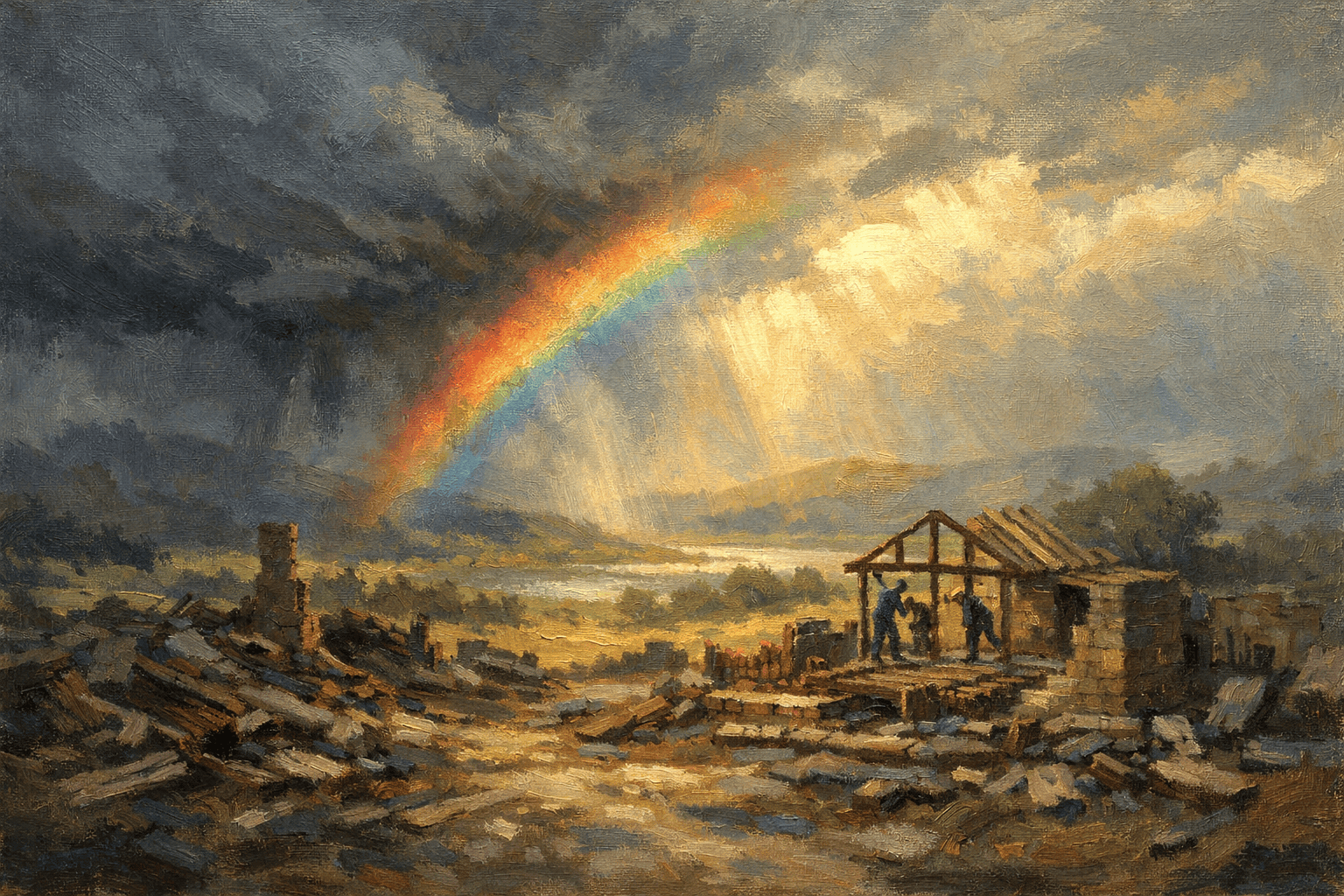
Not always. The Bible warns us not to assume every tragedy is direct punishment, and it invites us to humble repentance, practical love, and hope in Christ.
Is God punishing us when disasters happen? Not necessarily—and we should be very careful about claiming we know God’s specific reasons behind any particular tragedy. The Bible teaches that we live in a broken world where suffering is real, and it also teaches that God is holy and just. Yet Scripture repeatedly pushes back against the idea that every disaster is a direct, targeted punishment for specific sins. Instead of making confident pronouncements, God calls us to turn to him, grieve honestly, love our neighbors, and cling to Jesus—the One who entered our suffering and defeated death.
What does the Bible say about why disasters happen?
The Bible opens with a good creation, but sin damages everything. When humanity rebelled against God, the consequences were not only spiritual guilt but also death, pain, and disorder in human life (Genesis 3). Paul later says creation itself has been “subjected to futility” and “groans” as it waits for God’s final renewal (Romans 8:20–22). That helps us understand why we see disease, decay, and devastation in the world. Some suffering is not a neat moral equation; it is part of living in a world that is not yet made new.
This does not mean God is absent. Scripture is clear that God remains Lord over his creation. But it also prepares us for hardship in this age. Jesus told his disciples they would have trouble in the world, even as they take courage in him (John 16:33). The Bible also gives us language for lament—bringing sorrow and confusion to God without pretending we have all the answers (Psalm 13; Psalm 46).
Does the Bible ever describe God judging through tragedy?
Yes. The Bible teaches that God is just, hates evil, and will ultimately judge the world with righteousness (Acts 17:30–31). At various points in redemptive history, Scripture describes God bringing judgment, sometimes in dramatic ways. The point of those passages is not to make us speculative interpreters of every headline, but to remind us that God does not ignore sin forever.
At the same time, the Bible also emphasizes God’s patience and mercy. God delays final judgment so that people have time to repent (2 Peter 3:9). That means we should expect to see a world where evil and suffering persist for a time, while God continues calling people to salvation.
So, can God judge? Yes. But does that mean we can confidently label any specific hurricane, earthquake, or fire as a direct punishment? Scripture urges caution and humility.
Why shouldn’t we assume every disaster is direct punishment?
The Bible warns us about this mindset in multiple ways. Job’s friends looked at his intense suffering and concluded, “This must be punishment for your sin.” But God rebuked them for speaking wrongly about him (Job 42:7). Their certainty wasn’t wisdom; it was presumption that harmed a suffering man.
Jesus addressed a similar assumption. People told him about a brutal tragedy, and Jesus mentioned another—a tower collapse that killed several people. His conclusion was not, “Those victims were worse sinners.” Instead, he called everyone to repent and be ready to meet God (Luke 13:1–5). Tragedy, in Jesus’ teaching, is not a scoreboard for ranking guilt.
Jesus also corrected the idea that a man’s blindness must have been caused by either his own sin or his parents’ sin (John 9:1–3). He did not deny the reality of sin in the world. He denied our impulse to assign specific blame to specific sufferers when God has not spoken.
A simple way to say it is this: God’s justice is real, but our ability to interpret his secret purposes is limited. We should not claim certainty where Scripture does not give it.
If we can’t always know why, what is God calling us to do?
Jesus’ response in Luke 13 is striking because it turns the question inward. Instead of pointing fingers at victims, he calls all people to repentance (Luke 13:1–5). That does not mean victims deserved their suffering. It means every tragedy should remind us that life is fragile and eternity is real.
Repentance in the Bible is not a vague feeling of regret. It is a change of direction—turning from self-rule and turning to God. It includes faith that trusts Jesus as Lord, not just agreement with facts about him (Mark 1:15).
At the same time, Scripture calls God’s people to compassion and action. When disaster strikes, love should become practical:
- Weep with those who weep (Romans 12:15).
- Help the vulnerable and afflicted (James 1:27).
- Act like the good Samaritan—showing mercy with time, resources, and presence (Luke 10:33–37).
A tragedy is not the moment for smug explanations. It’s a moment for humble prayer and costly love.
Where is Jesus when everything feels shaken?
If you want the clearest picture of God’s heart toward suffering, look at Jesus. God did not watch pain from a distance. Jesus entered our world, carried burdens with people, and wept at a graveside (John 11:35). Then he went to the cross to bear our sins, and he rose again to break the power of death (1 Peter 2:24; 1 Corinthians 15:3–4).
That matters because Christianity doesn’t say, “Suffering is an illusion,” or “God doesn’t care.” The cross says God takes sin and evil seriously. The resurrection says evil and death do not win.
This gives believers a steady hope: God can bring real good out of what is truly terrible (Romans 8:28), without calling the terrible thing “good.” And it points us forward to the day Jesus returns, judges evil fully, and renews creation completely (Revelation 21:1–4).
Is it wrong to see disasters as a wake-up call?
It’s not wrong to let suffering wake you up spiritually—Jesus does exactly that in Luke 13:1–5. But there’s a difference between saying, “This tragedy reminds me to repent and seek God,” and saying, “This tragedy happened because those people sinned in that specific way.” The first response is humble and biblical. The second often goes beyond what God has revealed.
A common misunderstanding is to think: “If it’s not direct punishment, then God must not be in control or God must not care.” Scripture doesn’t allow that conclusion. God is both sovereign and compassionate, and he is also patient—calling people to turn to him before the final day of judgment (2 Peter 3:9).
What should I say to someone affected by disaster?
If you’re trying to help someone who has lost a home, a job, or a loved one, Scripture steers you toward compassion, presence, and practical care.
Consider responses like:
- “I’m so sorry. I’m here with you.”
- “Can I pray with you right now?”
- “What do you need this week—food, a ride, help making calls, a place to stay?”
Avoid quick spiritual explanations. Even true statements can land like stones when someone is in shock. Love first. Listen well. Then, when the time is right, gently point them to God’s nearness and the hope of Jesus (Psalm 46; John 16:33).
Can God use disasters to get our attention?
Yes—tragedy can sober us and move us toward repentance and faith (Luke 13:1–5). But that is different from claiming certainty about why a specific disaster happened. We should not assume every modern disaster is a direct punishment. Jesus warned against treating tragedy as proof that victims were worse sinners (Luke 13:1–5).
What should Christians do when disaster strikes?
Repent of your own sin, pray, and show practical mercy to those who are hurting (Romans 12:15; Luke 10:33–37; James 1:27). Let love be visible.
What to do next
- Bring your fear and grief to God honestly in prayer (Psalm 13; Psalm 46).
- Let tragedy move you toward repentance and deeper trust in Jesus (Luke 13:1–5).
- Serve in practical ways: give, volunteer, check on neighbors, and support relief efforts (Luke 10:33–37; James 1:27).
- If you’re not following Christ, turn to him—believe, repent, confess Jesus as Lord, and pursue baptism by immersion as the biblical response of faith for the forgiveness of sins (Acts 2:38; Romans 10:9).
- Connect with a healthy local church for prayer, guidance, and ongoing discipleship; talk with a pastor/elder or trusted Christian leader.
Genesis 3:16–19; Psalm 13; Psalm 46; Luke 13:1–5; John 9:1–3; John 11:35; John 16:33; Romans 8:20–22; Romans 12:15; Hebrews 12:5–11; Acts 2:38; 1 Corinthians 15:3–4; Revelation 21:1–4
Memorize these passagesHear them read, say them back, and learn them by heart.
- God, Chaos, and the Nashville Tornado by Daniel McCoy/Renew.org RENEW.org resource
Also asked as
- Are natural disasters punishment from God?
- Is God punishing me?
- Does God send disasters to punish people?
- Is tragedy a sign that God is angry?
Part of the question Who is God?