
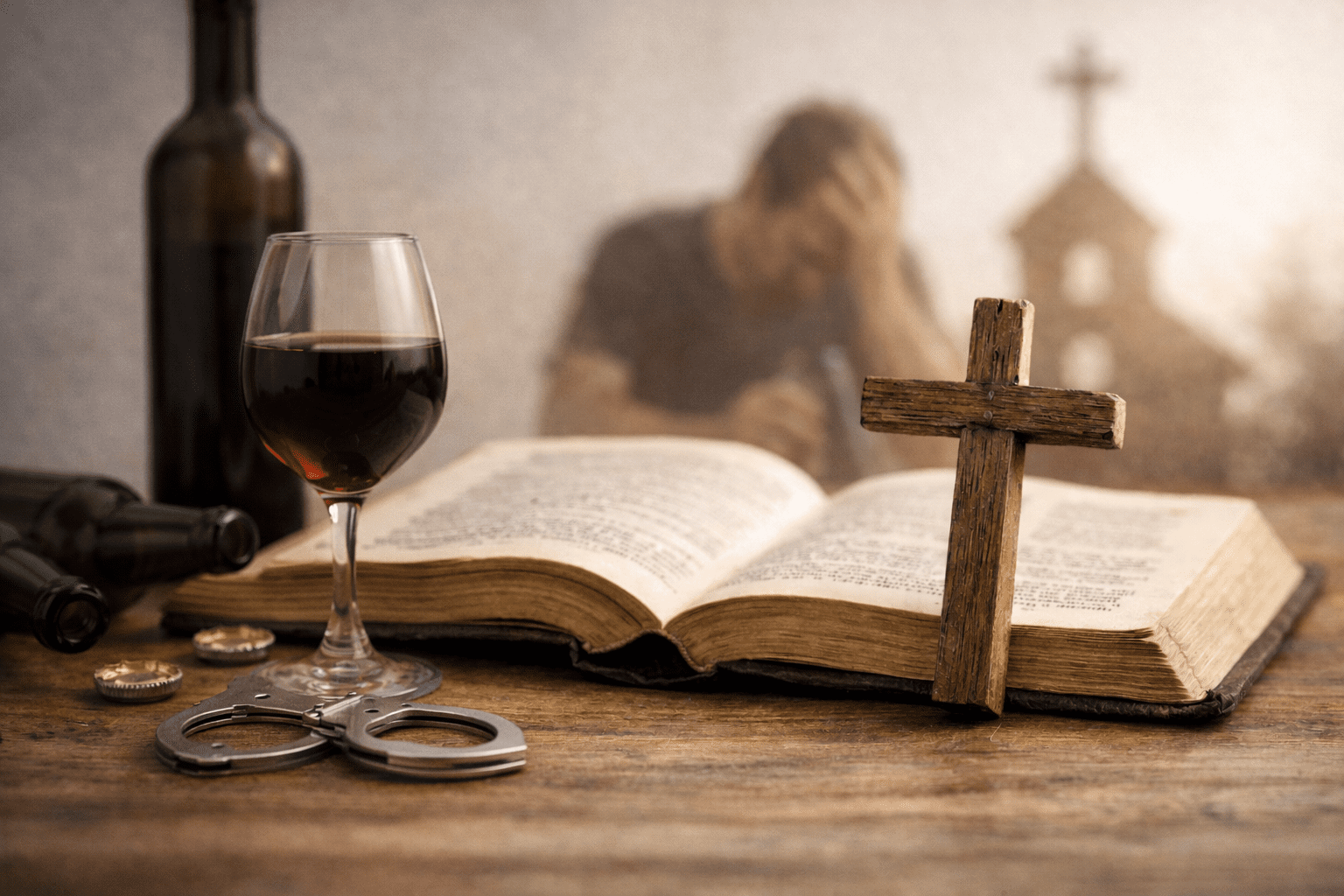
Drinking alcohol is not automatically a sin in the Bible, but drunkenness is sin, and Christians are called to sobriety-minded self-control, wisdom, and love for others.
Many people ask whether the Bible forbids alcohol entirely or only warns about abusing it. Is drinking alcohol a sin? What does the Bible teach about alcohol, moderation, and drunkenness? Scripture gives a balanced answer: alcohol can be received as a created gift, but God strongly condemns drunkenness and calls his people to live alert, self-controlled, and loving toward others.
The Bible doesn’t treat wine or “strong drink” as magically evil. In some places, it’s connected to celebration and God’s provision (Psalm 104:14–15). Jesus’ first recorded sign was at a wedding where he provided wine (John 2:1–11). That matters because it shows we shouldn’t label every use of alcohol as sin when the Bible does not.
But the Bible also refuses to be naïve. Alcohol can be dangerous. It can cloud judgment, feed impulsive choices, and become a master that demands more and more. God’s Word repeatedly warns that alcohol can “bite like a serpent” when it’s pursued foolishly (Proverbs 23:29–35). The goal is not to win an argument about permission; the goal is to follow Jesus with a clear mind, a clean conscience, and a steady love for people.
What the Bible permits and what it does not
A simple way to summarize the biblical teaching is:
- Alcohol itself is not called sin in every circumstance.
- Drunkenness and being controlled by alcohol are called sin.
- Wisdom, self-control, and love must guide every choice.
That means two errors should be avoided.
One error is: “All drinking is sin.” Christians who take that position often do it from a desire to protect people from real harm. That desire can be loving. But we should be careful not to bind consciences where Scripture has not clearly bound them.
The other error is: “As long as I’m not passed out, it’s fine.” The Bible calls us to more than avoiding the most extreme outcome. God wants his people to be sober-minded, reliable, and filled with the Spirit.
Drunkenness is clearly condemned
The Bible speaks plainly about intoxication. Paul writes, “Do not get drunk with wine… but be filled with the Spirit” (Ephesians 5:18). Notice the contrast: disciples are meant to be directed by God’s Spirit, not dulled or driven by a substance.
Drunkenness is also listed among sins that characterize a life turned away from God (1 Corinthians 6:9–11; Galatians 5:19–21). These passages are not meant to crush a person who is struggling; they are meant to warn us that this path is spiritually serious. And they also offer hope: Paul reminds believers that some of them used to live that way, but they were “washed” and changed by Christ (1 Corinthians 6:11). The gospel is strong enough to forgive and transform.
So if you’re asking, “Where is the bright line?” Scripture’s bright line is this: don’t get drunk—don’t surrender your mind, emotions, body, or decisions to intoxication.
What “moderation” should mean for a Christian
The Bible doesn’t give a single number of drinks that applies to every person in every place. Instead, it gives principles that aim at the heart and at real-life outcomes.
A helpful biblical definition of moderation is: using freedom with self-control so you can love God and neighbor with a clear mind.
Here are some questions to apply those principles:
- Am I staying sober-minded? The New Testament often calls believers to be alert and self-controlled (1 Peter 5:8; Titus 2:11–12). If alcohol makes you “fuzzy,” careless, or impulsive, you are drifting away from that calling.
- Am I becoming dependent? If you “need” a drink to relax, sleep, socialize, or handle stress, that can be an early sign of slavery. Scripture warns against being “mastered” by anything (1 Corinthians 6:12).
- Does it feed sin patterns? For some people, alcohol lowers inhibitions in ways that lead to lust, anger, crude speech, or risky behavior. If it regularly opens the door to sin, wisdom says close the door.
- Would I be ashamed if others saw it? That doesn’t mean you must please everyone, but it can reveal whether you’re hiding or excusing something. Walking in the light is part of Christian maturity (1 John 1:7).
- Can I stop easily? If “one more” keeps winning, that’s not freedom.
Moderation is not only about quantity. It’s also about setting, motives, and impact.
Love and conscience matter
Romans 14 is a key chapter for questions like this. Paul teaches that believers may land differently on disputable matters, and we must not judge one another harshly. Some Christians abstain; others partake with gratitude. The big command is to pursue peace and avoid putting a stumbling block in someone else’s way (Romans 14:13–21).
That means you can ask:
- Will this harm someone near me? If a friend is recovering from addiction, love may mean you don’t drink around them—maybe you don’t bring it into the home at all.
- Am I pressuring others? It’s unloving to tease or push someone to drink when their conscience is uneasy.
- Will this damage my witness? Paul’s guiding aim is that everything be done for God’s glory (1 Corinthians 10:31). In some contexts, drinking could distract from Christ or weaken trust.
Christian freedom is never meant to be selfish. Freedom is meant to serve love.
When abstaining may be the wisest choice
Even though the Bible does not command every believer to abstain from alcohol, there are situations where abstinence is clearly wise and often the most loving path:
- If you have a history of addiction or loss of control
- If alcoholism runs in your family and you see warning signs
- If you’re dealing with anxiety, depression, grief, or trauma and using alcohol to cope
- If you are responsible for safety-sensitive work (driving, caregiving, operating equipment)
- If it would trouble your spouse, harm your marriage, or confuse your children
- If it would cause a brother or sister to stumble
In those situations, abstaining is not weakness. It can be a strong, humble act of wisdom.
A common misunderstanding to avoid
A common misunderstanding goes like this: “Jesus made wine, so the Bible basically supports drinking however I want—just don’t get totally wasted.”
But the Bible’s call is deeper than “avoid the worst.” Scripture calls believers to be transformed, to grow in self-control, and to live with sober judgment. The question is not only, “Am I allowed?” A better question is, “Does this help me live like Jesus—clear-minded, loving, and ready to obey?”
What if alcohol already feels like a chain?
If alcohol has become a “master,” you are not alone, and you are not beyond hope.
Some warning signs include:
- hiding how much you drink,
- lying about it,
- feeling irritable when you can’t have it,
- needing more to get the same effect,
- repeated relational conflict because of it,
- failing responsibilities, then excusing it.
If that’s you, the most important step is to bring it into the light. Confess it to God (1 John 1:9). Then tell a trusted Christian leader or mature believer who will walk with you in truth and grace. God often heals through community—through prayer, accountability, wise counseling, and practical support.
And if you’ve hurt others while drinking, repentance includes making things right as much as possible: honest apologies, rebuilding trust patiently, and accepting boundaries others may need.
Jesus offers a better fill
Ephesians 5:18 doesn’t only say “don’t get drunk.” It also says “be filled with the Spirit.” That’s the heart of the issue: what is filling you, leading you, and shaping you?
Alcohol promises relief, confidence, escape, or comfort. Jesus offers something better and cleaner: forgiveness, a new heart, peace with God, and the Spirit’s power to live differently. This isn’t about moral superiority. It’s about freedom—real freedom—under the lordship of Christ.
If you are exploring faith, know that Jesus welcomes repentant people. The biblical response to the gospel is to turn from sin, confess Jesus as Lord, and be baptized into him, then learn to live as his disciple with his church (Acts 2:38; Romans 6:3–4).
What to do next
- Ask God for wisdom and honesty about your habits, motives, and limits (James 1:5; Psalm 139:23–24).
- If you drink, choose boundaries that protect sobriety-minded self-control and keep you far from drunkenness (Ephesians 5:18; 1 Peter 5:8).
- If your conscience is troubled, don’t ignore it—choose the path that builds faith and peace before God (Romans 14:22–23).
- If alcohol has become controlling, tell a pastor/elder or trusted leader and seek accountability, prayer, and wise counseling through a healthy local church.
- If you’re ready to follow Jesus, repent, confess him as Lord, and be baptized, then commit to ongoing discipleship in Christian community (Acts 2:38; Matthew 28:19–20).
Psalm 104:14–15; John 2:1–11; Proverbs 20:1; Proverbs 23:29–35; Ephesians 5:18; Romans 14:13–21; 1 Corinthians 6:9–12; 1 Corinthians 10:31; Galatians 5:19–21; Titus 2:11–12; 1 Peter 5:8; 1 John 1:7–9
Memorize these passagesHear them read, say them back, and learn them by heart.
Also asked as
- Can Christians drink alcohol?
- Is it a sin to drink wine or beer?
- What does the Bible say about drinking?
- Is getting drunk a sin?
Part of the question What does it mean to live faithful faith?